










Wike slams Onaiyekan over alleged 2023 election political bias
…Says ‘Tinubu only leader to fix Nigeria now’
BY STEPHEN GBADAMOSI
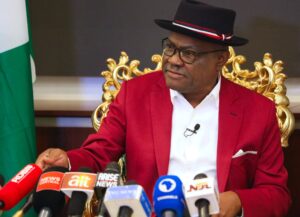
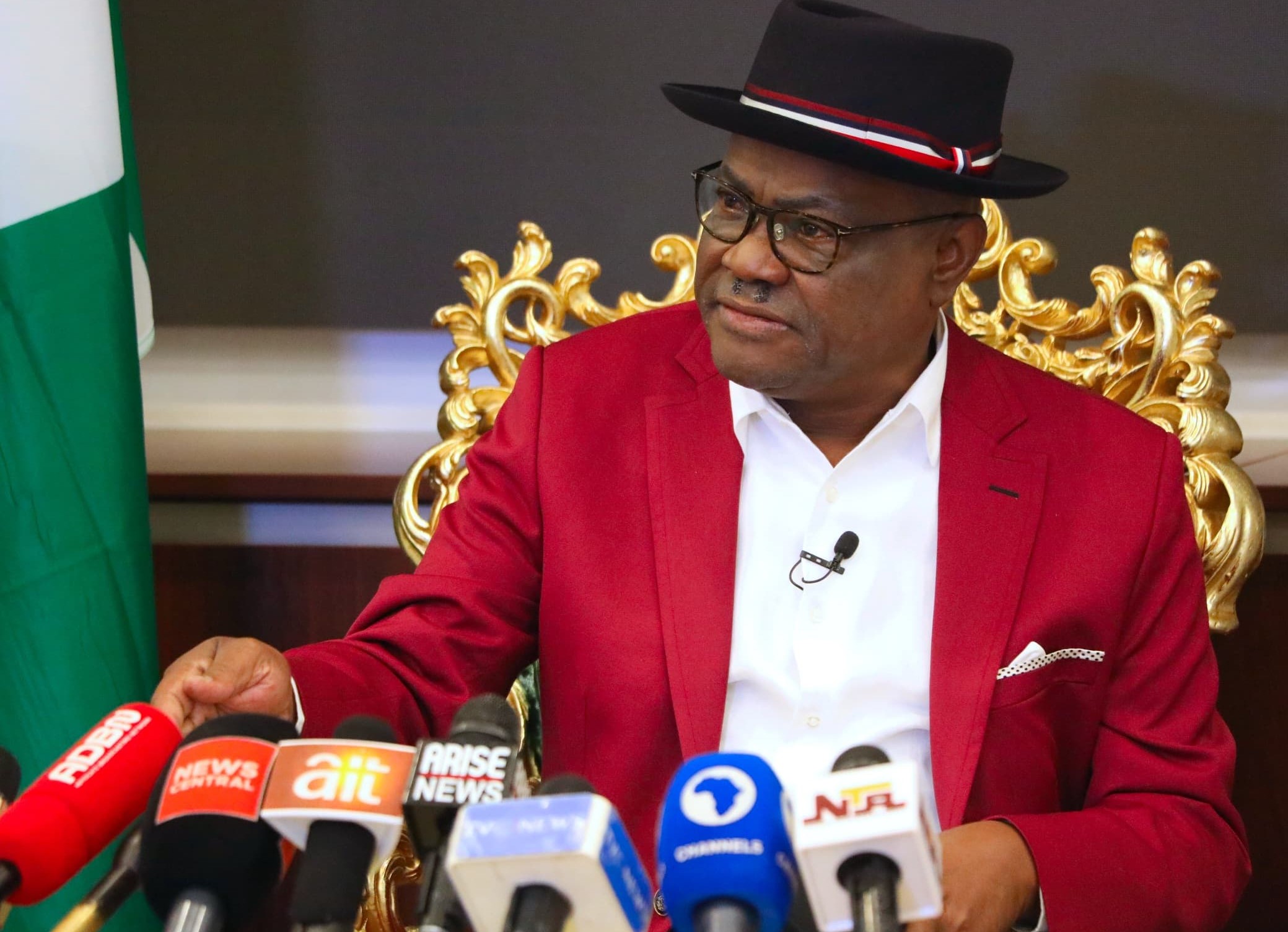
Federal Capital Territory (FCT) Minister, Nyesom Wike, has challenged alleged impartiality of Cardinal John Onaiyekan, accusing the Archbishop Emeritus of Abuja of taking sides during the 2023 general election.
The minister also said for now, Tinubu remained the leader that had the political will to fix Nigeria.
According to his media aide, Lere Olayinka, while speaking during a media parley on Tuesday, Wike addressed the recent clash between the Presidency and Onaiyekan following the Catholic Bishops’ Conference of Nigeria’s (CBCN) closed-door meeting with President Bola Tinubu.
After the meeting, Onaiyekan publicly suggested that aides were painting a “rosy picture” for the President while he remained focused on 2027—a statement the Presidency criticised as an abuse of privilege.
Wike argued that religious leaders undermined their credibility when their commentary was purely negative.
While acknowledging that constructive criticism was valid, the minister insisted that leaders must also recognise government achievements to remain objective.
He said while it was appropriate to criticise the government where necessary, leaders should also recognise areas where progress had been made.
“If a religious leader is seen taking a side, it becomes difficult for people to see their comments as helpful. Onaiyekan’s political leanings in 2023 were not hidden.
“I am aware of the position of Cardinal Onaiyekan; all of us know, it’s not hidden, whom he supports; everybody knows that.
“It’s not every time you say things are bad; nobody has heard you say the government has done this well.
“The point I am trying to make is that, as a leader, commend the government when it has done well in certain areas; criticise, but acknowledge areas of progress,” he said.
He concluded that consistent, one-sided criticism naturally led the government to view such remarks as politically-motivated, rather than objective advice.
“It’s not every time you say things are bad; nobody has heard you say the government has done this well,” Wike said.
In another development, Wike declared that President Tinubu remained the only credible leadership option for Nigeria, insisting that no other potential presidential contender had demonstrated the courage or capacity to confront the country’s long-standing economic challenges.
Olayinka said while speaking at his monthly media briefing on Tuesday in Abuja, Wike defended Tinubu’s economic reforms, particularly the removal of petrol subsidy, describing the decision as the boldest taken by any Nigerian president in decades.
According to him, while the reforms had imposed “temporary hardship” on Nigerians, they had strengthened the finances of state governments, improved infrastructure funding and ended the era when states depended on bank loans to pay workers’ salaries.
“Asiwaju is the only person we have now. He has not done everything; and nobody says he has; but he has shown the courage to take decisions others refused to take. Give him credit for that,” Wike said.
The minister argued that Nigerians should not expect an economy weakened over many years to recover within a short period.
“When problems have accumulated for over 15 years, people expect them to be solved in one year. It doesn’t work that way. Healing takes time, but it will happen,” he said.
Wike described the fuel subsidy regime as “a cancer,” recalling that as governor, he had to rely on bank borrowing to meet salary obligations because of declining allocations to states.
“The fuel subsidy consumed over ₦3 trillion at a time. Today, states receive more money. Pensioners are being paid, governors no longer queue before bank managers to borrow money just to pay salaries, and there are more resources for infrastructure,” he said.
He maintained that leadership was defined by the willingness to make difficult decisions, rather than by popular sentiment.
“Everybody agreed that subsidy was a scam, but no president had the political will to remove it. President Tinubu took that decision. No decision is 100 per cent perfect, but leadership is about taking responsibility,” he added.