



















Health condition of Abuja Ebola victim deteriorates –NSCDC
BY STEPHEN GBADAMOSI
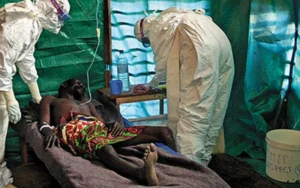
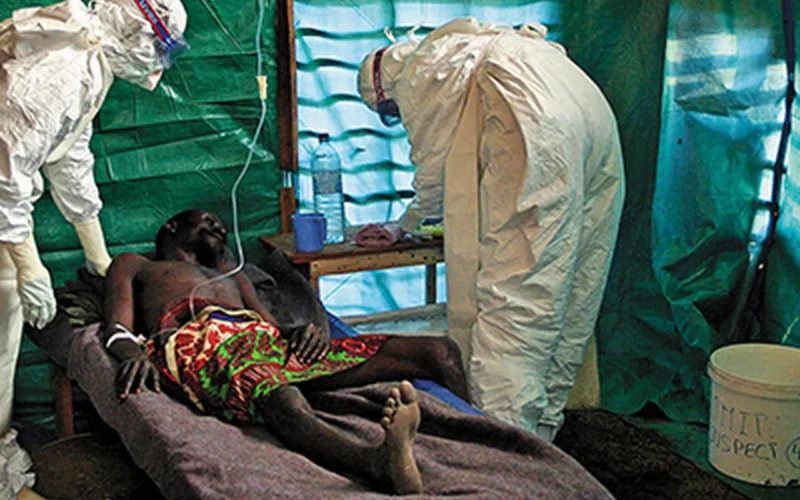
The health condition of the woman diagnosed with Ebola in the Federal Capital Territory (FCT) has worsened considerably with some of her vital organs no longer working.
The update came on Wednesday from the Nigeria Centre for Disease Control and Prevention (NCDC) in Abuja.
The disclosure came as Oyo State government allayed fears of presence of the disease in the Pacesetters State, saying Ebola is absent in the heavily populated South-West State.
Speaking during an emergency meeting, Director of Public Health Laboratory Service at NCDC, Olajumoke Babatunde, identified the patient as a diplomat, saying she had multi-organ failure.
Babatunde added that three levels of molecular tests showed her strain of Ebola to be the Bundibugyo type.
According to the World Health Organisation (WHO), that particular type or strain of Ebola, which had killed several thousands of people in Democratic Republic of Congo (DRC), had no approved vaccine or specific treatment at the moment.
Checks showed that medically known as Multiple Organ Dysfunction Syndrome (MODS), multi-organ failure is life-threatening and indicates that two or more vital organ systems have stopped working properly and so fail to maintain normal body functions without intensive medical intervention.
Recall that on Tuesday, Coordinating Minister of Health and Social Welfare, Prof Ali Pate, had lifted the lid on the presence of the dreaded Ebola in Nigeria, saying a patient, who is presently admitted in a health facility in Abuja and isolated, flew in on an international flight from Uganda, had fallen sick with malaria-like symptoms for several days in hospital, with laboratory tests eventually confirming that the symptoms were those of Ebola.
The minister added that subsequently, contact tracing had kicked off with 44 close contacts, including healthcare workers, patients, caregivers and travel contacts, all reached.
It is noteworthy that WHO and local media reports in the DRC, where Ebola is currently a major national affliction, had said that as of 19 October, the outbreak had claimed 4,602 lives.
“The patient’s condition has deteriorated. We did three levels of tests, but all were molecular. The strain was Bundibugyo,” Babatunde said.
Incident Manager of the National Ebola Response, Dr. Odianosen Ehiakhamen, said the patient developed symptoms on 7 October and was presented at the hospital on 11 October.