












The strategic necessity of Forum of PBAT appointed CEOs in actualizing re-election of Tinubu
BY WOLE BADMUS
In politics, electoral victories are rarely secured by rhetoric and sweet speeches alone. They are built on the pillars of performance, effective communication, public confidence and strategic mobilisation.
As Nigeria approaches the 2027 presidential election, these elements assume even greater significance for President Bola Ahmed Tinubu and the consolidation of the Renewed Hope Agenda.
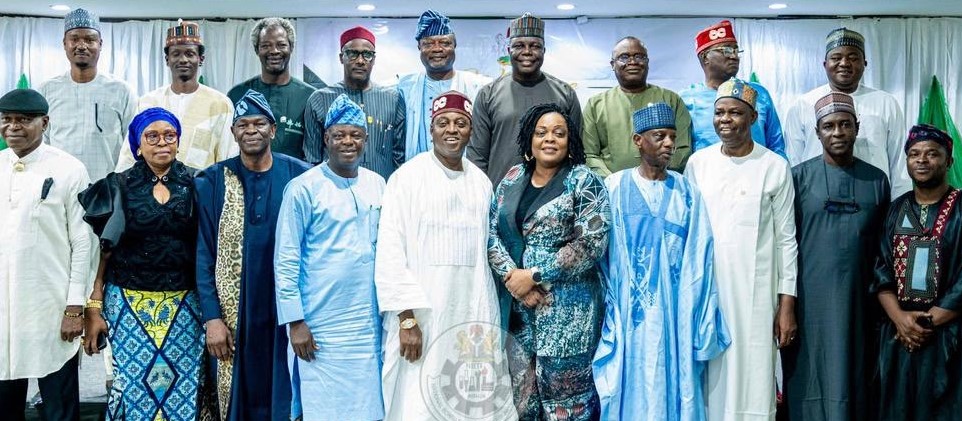
It is against this background that the maiden meeting of the Forum of PBAT CEOs, convened by the Director-General/CEO of the National Board for Technology Incubation (NBTI), Dr. Kazeem Kolawole Raji, in Abuja on August 27, 2026, deserves serious commendation.
Held at Aso Hall, Abuja Continental Hotel, under the theme, “Strengthening Collective Leadership, Mobilisation and Support for the Re-election of President Bola Ahmed Tinubu, GCFR, and the Renewed Hope Agenda,” the gathering was more than a meeting of government chief executives. It represented a strategic convergence of institutional leadership, professional competence and political responsibility around the continuity of the Tinubu administration.
One of the most compelling messages in Dr. Raji’s welcome address at the occasion was that presidential appointments are not merely positions of honour. They are mandates of service, instruments of national development and responsibilities to the Nigerian people.
This distinction is fundamental.
Every CEO, Director-General, Managing Director or head of a federal agency appointed by Mr. President is entrusted with translating presidential vision into policies, programmes, projects, opportunities and tangible results.
Consequently, the performance of these institutions is inseparable from the overall performance of the administration.
When an agency creates jobs, supports entrepreneurs, empowers young people, attracts investment, develops infrastructure, commercialises innovation or improves service delivery, it is not merely fulfilling its statutory mandate; it is contributing to the administration’s scorecard.
Performance, therefore, is a political capital.
However, performance that remains unknown to the public cannot generate the confidence it deserves. This explains the importance of Dr. Raji’s admonition that achievements must be delivered, measured, documented and communicated.
It is instructive to mention here that President Tinubu assumed office at a time when the Nation was confronted with deep-rooted economic and structural challenges. His administration responded with necessary reforms, including fuel-subsidy removal, foreign-exchange reforms, fiscal and tax reforms, interventions in power and infrastructure, development finance and measures designed to stimulate investment and domestic production.
These decisions have not been without some level of economic strains. However, structural problems require structural solutions and short-term sacrifices are essentially necessary to secure long-term economic stability.
Notwithstanding, three years into this administration, one can conveniently point to improvements in public finances, investor confidence, domestic refining capacity, CNG infrastructure enhancement, tremendous public infrastructure development, agriculture, education, housing, healthcare, technology, innovation, power and digital connectivity as areas of progress.
The critical challenge now is in communication to the voting Public.
Of course, Mr. President cannot personally narrate the achievements of every ministry, department and agency. That responsibility necessarily rests on those managing these institutions.
If an agency has created jobs, Nigerians should know.
If it has supported innovators, entrepreneurs, farmers, researchers, students or women, Nigerians should also know.
If it has attracted investment, improved infrastructure or strengthened service delivery, Nigerians need to also know.
With this, the electorates will know that the PBAT Administration is work in progress and as the proposition goes that “one good term deserves another” provides the philosophical foundation for the argument for continuity.
Nigeria’s major development challenges cannot be resolved within a few years. Infrastructure projects, industrialisation, agricultural transformation, technology development, energy reforms and institutional restructuring require consistency and sustained implementation.
A country cannot afford to repeatedly abandon long-term programmes whenever political transitions occur.
Where policies are working, they should be strengthened.
Where programmes are yielding results, they should be expanded.
Where weaknesses exist, they should be corrected.
And where institutions are delivering, they should be supported to deliver even better.
That is consolidation, not complacency.
The case for President Tinubu’s re-election should therefore be situated within the context of continuity: whether Nigerians believe the reforms and development programmes already underway deserve the opportunity to mature and produce greater dividends. Of course the answer is in the affirmative.
The Forum of PBAT CEOs provides an important platform for achieving this objective.
Its significance lies not merely in bringing together senior government officials but in combining their institutional capacities, professional networks and grassroots connections.
Members of the forum interact with entrepreneurs, academics, young people, investors, professionals, traditional institutions, business leaders and communities across the country. Collectively, these networks constitute a formidable platform for explaining government policies and communicating measurable achievements.
The forum will also help break bureaucratic compartments and make Governmental Agencies intertwine seamlessly. Technology will support agriculture; agriculture will stimulate industry; infrastructure will unlock investment; investment will create jobs; and innovation will invariably drive industrialisation.
Greater inter-agency collaboration can therefore transform individual institutional achievements into a more coherent national development story which is a major prerequisite for President Tinubu’s re-election in 2027.
The forum will consequently become not merely a social association, but a think-and-do platform for strategic consultation, collaboration, experience-sharing and responsible mobilisation.
Indeed, the strongest demonstration of loyalty to the President is not empty praise but measurable performance.
The 2027 election will not be won in Abuja alone. The grassroots will remain decisive.
President Tinubu’s appointees possess professional, institutional and community networks that can help bridge the gap between government and citizens.
These networks must be used to explain policies, communicate achievements, correct misinformation with facts and listen to legitimate concerns.
The Abuja meeting has established an important principle: the 2027 re-election project begins with effective governance today.
Every agency has a role. Every CEO has a responsibility. Every measurable achievement counts.
The President’s appointed CEOs and DGs must become ambassadors of performance, custodians of institutional credibility and champions of evidence-based communication.
They must deliver the mandate entrusted to them, document the results and communicate the impact to Nigerians.
The strongest case for President Tinubu’s re-election will ultimately not be made by slogans. It will be made by jobs created, businesses supported, innovations commercialised, investments attracted, infrastructure delivered, institutions strengthened and lives improved.
That is the real imperative of the President’s appointed CEOs and DGs.
*Otunba Badmus is the Special Adviser on Media and Publicity to the Director General and Chief Executive Officer of the National Board For Technology Incubation, Dr. Kazeem Kolawole Raji.