
















Omititun 3.0: Why Oyo must think politically
BY PRINCE MUJI ARMTRONG-BELLO
Politics is more than winning elections. It is about understanding power, scrutinising its exercise and determining whether it serves the public good.
As Oyo State approaches 2027, the “Omititun 3.0” slogan deserves thoughtful examination.
If 3.0 is presented as an extension of Governor Seyi Makinde’s 2.0, Oyo people are entitled to ask: What exactly is being continued? Is it successful policies and programmes, or an existing political structure and influence?
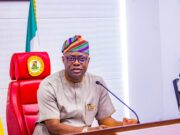
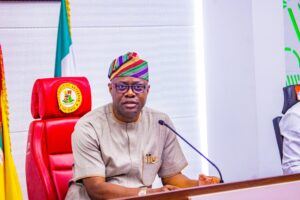
Governor Makinde is increasingly assuming the role of a political kingmaker. His influence now appears to extend beyond his own tenure to the succession he seeks to shape. There is nothing inherently wrong with seeking continuity, but the independence of the proposed successor becomes an important democratic question.
Honourable Bimbo Adekanmbi is not simply another aspirant who emerged independently within the political process. His emergence has been widely perceived as a direct product of Governor Makinde’s preference. That fact makes the question of political independence even more important.
The issue goes beyond the governorship. The governor is also being credited by political observers with determining the candidates of his Allied People’s Movement (APM) for various elective positions in the 2027 general elections, as well as the chairmanship and councillorship candidates for the December 2026 local government elections.
If that perception is correct, it represents an extraordinary concentration of political influence. It also helps explain the reported friction between the governor and some other APM leaders who feel excluded from decisions concerning the party’s candidates and direction.
But political control of a party is not the same thing as democratic legitimacy. Ultimately, candidates must persuade the electorate that they deserve its mandate, not merely demonstrate that they have secured the endorsement of the political establishment.
The question of Adekanmbi’s independence deserves particular attention because of his own political history.
As Commissioner for Finance, Budget and Planning under the late Governor Abiola Ajimobi, he publicly discussed allegations concerning billions of naira allegedly lost or misappropriated during that administration.
In one widely reported account, Adekanmbi referred to allegations involving “over 20/30 billion naira” and separately discussed another allegation involving ₦10 billion. He also maintained that he was not personally responsible and explained that he had been invited to answer questions concerning the matter.
That history creates a legitimate test of consistency. If yesterday’s government could be subjected to a searchlight over public finances, would tomorrow’s government be prepared to apply the same standard to the administration immediately preceding it?
This is not an allegation that Adekanmbi would refuse to investigate anything. It is a question of political independence. If a successor owes his emergence principally to the outgoing political establishment, can he freely scrutinise the records of that same establishment?
Governor Makinde has publicly stated that he would not become a godfather to an Adekanmbi administration. That declaration should be acknowledged. But political wisdom requires citizens to examine political structures as well as political statements.
There is, however, an irony that Oyo voters must carefully consider. The political effect of “Omititun 3.0” could, in practice, be potentially more consequential to the independence of a successor than the conventional godfatherism that Governor Makinde has publicly promised not to practice. Godfatherism is normally understood as the influence of one political actor over another; but when a successor is presented as the continuation of an incumbent’s own political project, that influence may become embedded in the very architecture of succession. The absence of a godfather in name does not necessarily guarantee the absence of godfatherly influence in practice. The real question, therefore, is not what the relationship is called, but whether the successor will possess sufficient political independence to govern, disagree and scrutinise the administration he inherits.
There is an even deeper concern: The democratic character of a succession depends not only on the personality of the successor, but also on the political process through which that successor emerges. Governor Makinde’s democratic disposition has not always inspired confidence among those who believe that members of a political organisation should enjoy the freedom to aspire, compete and choose their preferred candidates.
Where political influence is perceived to determine who may aspire and who ultimately receives the party’s ticket, the process risks becoming less about democratic choice and more about political selection. It would, therefore, be difficult to expect a successor produced through such a process to be completely detached from the political tendencies and structures that produced him.
A genuinely democratic succession should empower the people and the party membership to make choices, rather than merely ratify choices already made by political authority.
The same principle applies to continuity itself. Continuity can be valuable when it preserves policies that work, strengthens institutions and advances the public interest. But continuity should never become immunity from scrutiny, nor should it prevent a successor from correcting what requires correction.
Oyo State has already witnessed serious public debates over issues including the Federal Government’s intervention funds connected with the Bodija explosion, the acquisition and compensation of land along the Circular Road corridor, expenditures on Agbowo Shopping Complex redevelopment among others.
The government has offered explanations. The responsibility of citizens is to determine whether those explanations are sufficiently convincing.
This is what it means to think politically: To look beyond slogans, personalities and political alliances and examine consequences, institutions, incentives and the public interest.
The 2027 election should, therefore, not be viewed merely as the passage “from 2.0 to 3.0.” It should be viewed as a choice between political continuity and genuine democratic renewal.
The real question is whether Oyo State is choosing a genuinely new administration or simply changing the occupant of Government House with a caretaker while retaining an existing political project.
A successor should inherit the institutions of government, not a political obligation to protect the legacy of the person who helped him to power. The Governor’s office belongs to the people of Oyo State.
Oyo State needs leadership capable of creating jobs, strengthening education and healthcare, improving agriculture, protecting lives and property, expanding economic opportunities and managing public resources transparently.
The electorate should, therefore, examine records, question manifestos and assess the independence and capacity of every candidate. It should distinguish between continuity of good governance and the perpetuation of political influence.
The 2027 election should not be a referendum on the political survival of any individual. It should be a decision about the future of Oyo State.
Oyo State deserves a new and sound direction, one founded on competence, accountability, independent judgment, people-centred governance and an unwavering commitment to the public interest.
Oyo people must think politically before they vote politically.
* Armstrong-Bello, JP. Akogun Aliiwo, Ibadanland, author of “Yoruba Leadership in Diaspora: Equity, Justice and Tradition,” is a political communication strategist and public affairs analyst.