
















“Anything you can do/I can do it better/I’m the toughest (I’m the toughest)/And I can do what you can’t do/You’ll never try to do what I do/I’m the toughest/I’m the toughest” (1978) – Peter Tosh.
Growing up in the late sixties, seventies and early eighties, we were regaled with a lot of competition and “fights” on multiple fronts between musicians, much of which, we later learnt, were orchestrated by their supporters or by the musicians themselves to sell their market, as they say.
For instance, between Ebenezer Obey and Sunny Ade, Dele Abiodun and Emperor Pick Peters, Kollington Ayinla and Sikiru Ayinde Barrister, Christy Essien-Igbokwe and Onyeka Onwenu, among others. Every song, every talking drum or guitar gyration was given meanings that further fuelled the “cold war” between rival musicians.
The musicians themselves hardly helped matters. Today, they will deny any acrimony between them. Tomorrow they will say “fight has finished” and will begin to sing the praises of those who had helped to quench the fire! Next tomorrow, another “orin ote” (abusive songs and drum beats that scatter ground) will rear their ugly heads again! Musicians tend to enjoy the popularity that rivalries and orchestrated fights attract. It helps to line their pockets as they smile their way to the bank after every record they release.
Some have interpreted the opening quote above by Peter Tosh, an outstanding reggae artiste in his own right, as an indication that rivalry amongst musicians is not limited to Nigerian artistes. Who was Tosh referring to here? Tougher than who? His former colleagues in The Wailers? And, again, who was he mocking in Downpressor Man (1977)? The unjust, oppressive “Babylon system” to some; but, to others, his former compatriot, Bob Marley, who had fled Jamaica following an attempted assassination at his home on December 3, 1976.
Seun Anikulapo-Kuti and Ayodeji Ibrahim Balogun (aka Whizkid) are said to be fighting. I am not a fan of either. I only took notice of their fight after reading what Whizkid was alleged to have said: that he is greater than Fela, Seun’s father! The uproar that greeted Whizkid’s alleged tantrums has, expectedly, been massive.
I am not here to add my own “yabis” but to try and throw some light on the matter by sharing two opinions that, in my view, frontally address the place of Fela and Whizkid in history. As my grandmother would say, d’elegha-m’egha. Everyone should know their proper place and relevance; so that no one trespasses into another’s lane.
The first opinion by Kio Amachree and titled “Wizkid is a celebrity. Fela was a musician. Know the difference” runs thus:
“Forty years ago, my records were played on Nigerian radio and sold across the country. I became known. Then I walked away, pulled the plug, and went to serve my National Service. I begin with this not out of nostalgia, but to make a necessary distinction. There is a difference between being a musician and being a celebrity.
“Wizkid is a celebrity. A successful one. He has played the industry game well, written love songs for young girls, danced, been marketed, promoted, and rewarded handsomely. He is a pop star of his era.
“But he is not a musician in the historical or cultural sense. He does not play an instrument. His lyrics do not interrogate power. His music does not challenge society. That is not a crime. But it is a category. And categories matter.
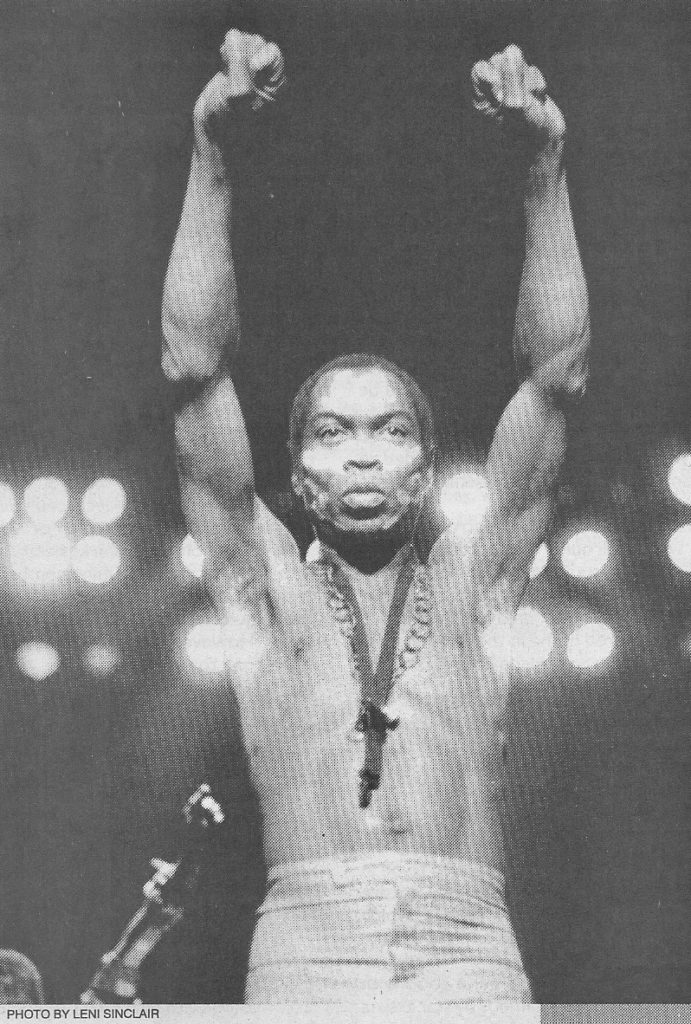
“Fela Kuti was something else entirely. Fela was classically trained. He could read and write music. He played multiple instruments. He created a new musical language and used it as a weapon against corruption, dictatorship, and injustice. His songs shook governments. They also brought him beatings, prison, exile, and the death of his mother. He paid a price for truth. Repeatedly.
“Fela was offered millions to shorten his songs, stop being political, chase radio singles, and become ‘bigger than Bob Marley.’ He told them to go to hell! Mission mattered more than money.
“And let us be clear about something history often distorts: Fela was not from the gutter. He came from an educated, upper-class, sophisticated, powerful family. Yet he chose to stand with the poor, the beaten, the voiceless. That choice is what made him dangerous. That choice is what made him great.
“To boast that one is ‘bigger than Fela’ is not confidence. It is historical illiteracy. Celebrity fades. Bank balances (go) empty. Algorithms move on. What remains is courage, sacrifice, and contribution.
“I learned to use music to tell stories and push for social change from Fela and from my time with Bob Marley. Music can entertain. But at its highest level, it also confronts, educates, and liberates.
“Pop stars are free to chase charts and endorsements. That is their lane. But they do not get to rewrite history.
“Fela is not a brand to be compared. He is a standard. And standards are not measured by streams, accents, jewelry, or record advances. They are measured by impact, integrity, and what you are willing to suffer for the truth.
“Heroes are remembered. Celebrities are replaced!”
I am sure you are beginning to see the difference between Fela and Whizkid! Now take a look at the second opinion – it was a meeting between the reggae king, Bob Nesta Marley, and the king of pop music, Michael Jackson. Titled “Michael Jackson flew to Jamaica with a $50m offer — Bob Marley said NO”, it runs thus:
“When the world’s biggest pop star flies to Jamaica with an offer that could make you the richest reggae artist in history, most musicians (will) say ‘yes’ immediately. But when Michael Jackson sat face-to-face with Bob Marley in a Kingston hotel suite in 1978 and proposed a collaboration that would have created the most explosive musical partnership of all time, Bob’s response shocked the King of Pop and proved that some artists value message over money, soul over stardom, and spiritual integrity over commercial success.
“There is a fundamental difference between entertainment and enlightenment and… sometimes… legendary artists (choose) principles over profit and (stay) true to their spiritual mission.
“Los Angeles, California, October 20th, 1978. 2:15 p.m. Michael Jackson sat in his Beverly Hills recording studio, nervously adjusting his sequined glove as he reviewed documents his management team had prepared.
“At 20 years old, Michael was transitioning from Jackson 5’s teen heartthrob to a solo superstar. And he needed something that would establish his credibility as a serious artist capable of bridging different musical worlds. That something he believed was Bob Marley.
“The studio around Michael represented everything he had achieved and everything he hoped to transcend. Gold and platinum records lined the walls—achievements that had made him wealthy beyond imagination but hadn’t satisfied his artistic ambitions. Michael wanted respect from serious musicians, critics who dismissed pop music, and audiences who crave substance along with entertainment.
“Michael’s management team had spent months reviewing the viability of collaborating with Bob Marley. The numbers were staggering. Michael’s pop audience combined with Bob’s growing international following could create a market of over 100 million potential record buyers. But for Michael, the appeal went deeper than commercial success. He genuinely admired Bob Marley’s music and the profound impact it had on people.
“Michael’s mind flashed back to 1975 when Jackson 5 had performed in Kingston, Jamaica. That night backstage at the National Stadium, Michael had met Bob Marley for the first time. The encounter had left an indelible impression on the young entertainer. While Michael commanded stages through choreography, costume changes, and spectacular production, Bob’s power came from something entirely different—spiritual authority that needed no enhancement.
“Michael remembered watching Bob perform that night from the wings. There were no costume changes, no elaborate stage effects, no choreographed dance moves – just Bob, his guitar, and a message that seemed to flow directly from his soul to the audience. Bob had been gracious but enigmatic during their brief meeting, treating the famous Jackson brother with the same humble respect he showed everyone.
“Michael remembered being struck by Bob’s calm intensity, the way he seemed to be listening to something beyond the conversation, the profound peace that surrounded him despite the chaos of the music industry.
“Young Michael,” Bob had said, placing a gentle hand on the teenager’s shoulder. “Jah has given you great gifts. Use them to uplift people’s spirits.” At the time, Michael had interpreted this as encouragement for his entertainment career. Now he wondered if Bob had meant something deeper.
“Three years later, Michael was ready to bridge their two worlds. He had prepared extensively, studying Bob’s interviews and understanding Rastapharian philosophy. But this wasn’t something that could be handled through phone calls or intermediaries. Michael knew he needed to travel to Jamaica and meet Bob face-to-face to demonstrate the seriousness of his proposal.
“After 3 days of coordination through Chris Blackwell at Island Records, a meeting was arranged for October 23rd at the Pegasus Hotel in Kingston. Michael flew to Jamaica specifically for this encounter, understanding that the success of his proposal would depend on earning Bob’s respect through direct, honest conversation.”
We shall continue the encounter between Bob Marley and Michael Jackson next week but to close this part one, let me return to the opening quote by Peter Tosh and ask: Has Whizkid demonstrated that he is as tough – not to talk of being tougher – than Fela and has he done a fraction of the things Fela did, which impacted peoples, governments, and Black identity worldwide?
Michael Jackson has now arrived in Jamaica for a meeting with Bob Marley. Read on!
“Kingston, Jamaica, October 23rd, 1978. 8:30 p.m: The exclusive Pegasus Hotel’s penthouse suite was buzzing with quiet conversation when Michael Jackson walked through the heavy wooden doors… Michael had an agenda beyond social pleasantries. He wanted to propose something that would reshape both (his and Bob Marley’s) careers forever.
The contrast between the two men was immediately striking. Michael wore an expensive silk shirt, perfectly tailored pants, and his signature sequin glove, representing everything successful about the American music industry. Bob, in contrast, wore simple jeans and a cotton shirt, his dreadlocks flowing naturally, embodying the authentic spiritual energy that had made him reggae’s most respected voice…
Bob looked up as Michael approached, setting down his guitar with the measured calm that characterized everything he did. “Michael Jackson,” Bob said with a slight smile, gesturing to the empty chair across from him. “The prince of pop music. Bless up, brethren.”
Michael slid into the chair, immediately struck by the difference between this intimate setting and their brief backstage encounter three years earlier. Here, face-to-face, he could see the profound intelligence in Bob’s eyes—the spiritual weight he carried, the way he seemed to be listening to something beyond their conversation.
“Bob, it’s an honor to finally sit with you properly”, Michael said, his nervous energy evident despite his attempt to appear confident. “I’ve been hoping for this opportunity for years.
Bob’s expression remained warm but curious. “What brings the King of Pop to Jamaica, Michael? What’s on your heart?”
Michael leaned forward across the small table between them, his excitement building as he outlined his vision. “Bob, I want to propose something that could change music history. A full collaboration—an album, a world tour, maybe even a concert film. We could combine your consciousness with my reach, your message with my platform.”
Bob studied Michael’s face carefully, reading not just his words, but his intentions… “Tell me more about this vision,” Bob said, folding his hands on the table.
Michael’s excitement grew as he painted his picture, gesticulating with typical enthusiasm. “Picture this: your spiritual lyrics with my melodies and production values. Your authentic message
Reaching mainstream audiences who have never heard conscious music. We could reach 100 million people with messages about unity, love, and social justice.” Michael outlined the scope of his vision with genuine passion. Record executives had estimated the project could generate over $50 million in revenue. The tour would hit every major American city, introducing reggae to audiences who had never heard conscious music before.
Bob listened intently, occasionally nodding, but his eyes never left Michael’s face. Across the table, he could sense Michael’s genuine enthusiasm—but also the fundamental misunderstanding that lay beneath the proposal. “And how would this collaboration work practically?” Bob asked quietly. “Would my message change to fit your audience or would your audience change to receive my message?”
The question hung in the air between them like smoke from sacred fire. Michael hadn’t expected such a direct philosophical challenge, and Bob’s steady gaze made it impossible to avoid the deeper implications of what he was proposing.
“We could find a middle ground, hopefully” Michael suggested. “Keep your message but make it more accessible to mainstream audiences who might not be ready for the full intensity of Rastapharian philosophy.”
Bob leaned back slightly, creating physical space that somehow made his next question more powerful. “What does more accessible mean, Michael?”
Sitting across from Bob in the intimate setting of the suite, Michael felt the weight of having to articulate something he’d never fully examined. “Maybe less political content, more universal themes like love and unity that don’t make people uncomfortable—songs that can play on mainstream radio without causing controversy.”
Bob’s response was gentle but penetrating, his voice cutting through Michael’s commercial enthusiasm like truth through illusion. “Universal love that avoids uncomfortable truths isn’t universal love, Michael. It’s comfortable love. And comfortable love never changed anything.”
The face-to-face setting made every word feel more significant, more personal. Michael could see the compassion in Bob’s eyes, but also the unwavering commitment to principles that couldn’t be compromised for any amount of success.
Bob continued with an insight that would haunt Michael for years. “When you perform, Michael, what are you trying to accomplish? What do you want people to carry with them when they leave your concert?

Michael straightened in his chair, suddenly feeling like a student being examined by a master teacher. “I want to entertain people, make them happy, give them an escape from their problems, and I want to wake people up.”
Bob replied, his voice carrying the same authority that made his music so powerful. (In contrast, explaining what he seeks to accomplish when performing, Bob said): “To help them understand their problems and find the strength to solve them. Both callings have value, but they cannot be the same thing.” Bob’s voice took on the teaching quality that made his conversations as influential as his songs.
“Michael, you have tremendous talent, tremendous gifts from Jah. Your ability to move people through music is extraordinary. But this collaboration you are proposing—it would require one of us to compromise our essential nature.”
The conversation continued for over an hour with Bob patiently explaining his philosophy while Michael tried desperately to find ways to make the collaboration work. But sitting face-to-face, seeing Bob’s unwavering spiritual commitment up close, Michael began to understand that this wasn’t about business strategy or creative compromise. It was about two fundamentally different approaches to the purpose of music.
Bob continued with profound gentleness. “When Marcus Garvey spoke about black pride, white people were uncomfortable. When Martin Luther King spoke about justice, white people were uncomfortable. When Jesus spoke about loving your enemies, everyone was uncomfortable. Discomfort is often the first sign that consciousness is awakening.”
Bob paused, allowing his words to settle. “When you perform, you give people what they want—happiness, excitement, escape. When I perform, I give people what they need—truth, consciousness, spiritual awakening. Both serve Jah’s purpose, but they cannot be the same thing.”
“But think about the impact we could have together”, Michael said desperately, leaning forward across the table. “The number of people we could reach with positive messages.”
Bob’s response became legendary among those who witnessed the meeting. “Michael, reaching many people with a diluted message is less powerful than reaching fewer people with a pure message. Quality of consciousness matters more than quantity of audience. Better to awaken one person completely than to entertain a million people temporarily.”
Michael felt the collaboration slipping away, but he made one last attempt. “What if we could do it your way? What if I adapted my style to your message instead of asking you to adapt your message to my style?”
Bob appreciated Michael’s willingness to consider this approach, but his answer revealed the deeper issue. “Michael, you are already perfect at what Jah called you to do. Your gift for bringing joy to people is precious and necessary. Don’t diminish that gift by trying to become something you are not. And don’t ask me to diminish mine by becoming something I am not.”
As their meeting neared its end, Bob said: “You are a star, and stars are meant to shine bright and bring joy to people. I respect that calling deeply. But I am not a star. I am a messenger. And messengers must deliver the message exactly as Jah gave it to them.”
Bob stood slowly, extending his hand across the table. “We both serve the same creator through different expressions. Your path is perfect for you. Mine is perfect for me. To change either would diminish both.”
When they shook hands, Michael felt both disappointed and enlightened. Bob had rejected the biggest collaboration offer in music history…The proposed Michael Jackson–Bob Marley collaboration never happened. But both artists went on to achieve their destinies authentically. Michael became the undisputed king of pop, using entertainment to bring joy to billions worldwide. Bob remained reggae’s spiritual messenger until his death in 1981.
Years later, Michael would credit that face-to-face meeting with teaching him about artistic integrity. “Bob taught me”, Michael said, “that every artist has to choose between being famous and being important.” Bob chose importance over fame every time…When Bob died in 1981, Michael was among the artistes who publicly honored his memory…The face-to-face meeting that could have created music history’s greatest collaboration instead created something more valuable—mutual understanding between two masters who recognized that their separate paths served the same goal of uplifting humanity through music.
The Michael Jackson–Bob Marley collaboration that never was reminds us that sometimes the most important artistic decisions are the ones that prioritize authenticity over opportunity, message over money, and spiritual integrity over commercial success.”
We can pigeon-hole Fela and Bob Marley together and Michael Jackson and Whizkid likewise. Everyone is blessed with talents; everyone is used by God for different purposes; everyone is a star in his own right; everyone, like Frantz Fanon posits, discovers their mission, to fulfil or betray it, taking different routes. There is no basis, therefore, for comparison. We cannot compare apples with oranges. Financial success and audience followership are poor yardsticks of measurement because conscious music (Bob Marley/Fela) is not the same as entertainment music (Michael Jackson/Whizkid).
*Bolawole is a Former editor of PUNCH newspapers, Chairman of its Editorial Board and Deputy Editor-in-chief. He was also the Managing Director/Editor-in-chief of The Westerner news magazine. He writes the ON THE LORD’S DAY column in the Sunday Tribune and TREASURES column in New Telegraph newspaper on Wednesdays. He is also a public affairs analyst on radio and television.
Between Fela and Whizkid
By Bola BOLAWOLE
turnpot@gmail.com 0807 552 5533, 0803 251 0193